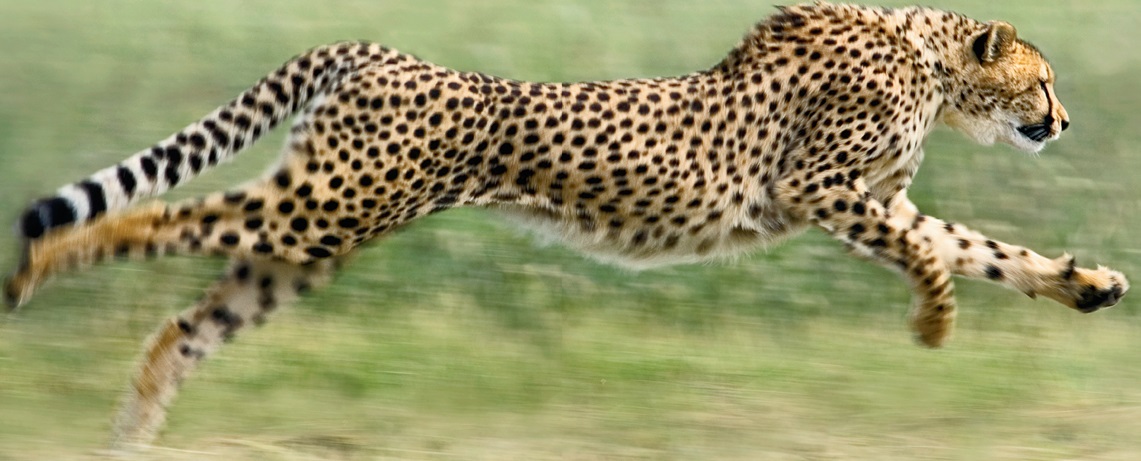
Something I am working on now and have written on in the past is running speed. Since I am currently working on that myself, I thought now was a good time to revisit this topic and share my thoughts and some suggested reading. As a note, I don’t recommend books unless I own and have read them.
Intervals
Interval training is your key to the kingdom. There are other options, but none as impactful. In fact, many studies I have read say turnover is key, but let’s face it, there’s a ton of mechanics and form involved, which are very tough to master, especially when starting out at a much slower pace. Many other methods you will read about are just types of intervals in which they are using the same concepts. To start, you will want to incorporate one interval run into your weekly running routine. Adding a second interval day can really improve you gains as well. In fact, your return from adding a second day is almost as high as adding the one. You can decide when to do this, but I recommend not the day before or after your long run.
The purpose of intervals is to repetitively run shorter distances at a faster pace. For example, if you only run 5k races, then your interval sessions will probably only total a couple miles. You may run a bunch of 200m sprints, with 50m recovery walks or jogs in between each sprint. If your current 5k race pace is 10 min/mile, then you will probably try and shoot for your 200m time to be in line with maybe an 8:30- 9 min pace. You can of course go as fast as your body will let you without getting hurt, but I am trying to be conservative here. So, this 9 min pace turns out to be about a 1 min 8 second 200m sprint (200m is 1/8 of a lap at a track, 400m is a lap or a quarter of a mile).
On your other interval day, if you decide to have two, you may want to do a mix of 200, 400, and 800m sprints, with maybe 50, 100, and 400m recovery walks or jogs; this is known as a ladder.
After doing this consistently for a while, along with your normal run training, you will start noticing your mile time drop significantly. The change doesn’t happen over night, but most people start seeing noticeable changes in speed within 4-6 weeks after incorporating the intervals into their current schedule.
You still need to do your pace runs and long runs, so you will have to fit the intervals into that mix.
Speed Work
Similar to intervals, speed work is a major part of running faster. However, I don’t really see a major gain of speed work over intervals until you get in much longer endurance training. Granted, speed work is super important you can simply add some speed work to your training and see speed improvements. You will see from this whole article that you can do many things to see improvements, it’s just that some methods will see greater gains than others.
Some basic examples of speed work are pace runs, increasing your speed for the last X minutes or miles of your run, periodically ramping up your speed during you run (not intervals, more scattered) or tempo runs. I could write pages and pages on each of these, but I wanted to just provide some examples.
Weight
Weight is an awkward variable that doesn’t really play a lot in your speed unless you are already getting into the professional level or you are starting from scratch and are overweight. If you are conditioned to run a certain pace at your current weight, and shave off a significant amount of weight, you should naturally become faster, because you have less weight you are carrying. For example, a 300lb person running a 12 min mile could potentially see their mile time drop to 10 min if they dropped to the low to mid 200’s. However, this assumes all other things stay constant; which is almost never the case. One of the biggest points here is that most people are doing diets to lose weight, and one of the problems of performing endurance cardio training and losing weight is that the caloric deficit will cause your body to consume muscle. Therefore, although losing weight, many times you are losing muscle as well, unless you are ensuring strength training during this along with getting the proper nutrients to offset this.
Slow vs. Fast Twitch Muscle Fibers
Let’s face it, some people were designed to be short distance runners, and others long distance runners. Speed for these two types of runners depend on different things; fast twitch and slow twitch fibers. The goods news is that the body is usually pretty balanced on slow and fast twitch muscle fibers. This means most people are capable of sprinting a short distance at a fairly quick pace for a short period of time; and likewise, can run a much longer distance at a much slower pace for a much longer duration. Slow twitch muscles are more geared toward endurance, as they fire slower, thus allowing better use of oxygen consumption. The key here is your fast twitch fibers.
There are two types of fast twitch, Type IIa and Type IIb. The key to improving speed revolves mainly around the Type IIa, which combines the use of aerobic and anaerobic metabolism. You can pretty much call this a sort of hybrid twitch fiber, as it’s basically a mix of slow and fast twitch.
Performing intervals for a cumulatively longer distance allows you to improve the efficiency of these fibers. Therefore, as you improve, they are more efficient at fuel consumption, thus allowing you to run at a faster pace for a longer distance.
Some Other Options
Strength training is something I recommend for everyone for everything. Why? Unless you have been relatively injury free your whole life and have never really missed a beat on fitness, chances are you a deficient in one to many major muscle groups, especially your core muscles. Therefore, there is nothing like building your muscles up to handle the impact of running. For example, I was in a major car accident over 10 years ago in which the doctor said I would have trouble walking forever, constant back pain, and never run again. I of course called bull on that, and thanks for a trainer I found who specialized in rehab, got me into CrossFit and rebuilding my core. After a year, I was not only back to running, but running faster than I had ever been, and this was despite me weighing more than I ever had before. The point here is that running, like most sports, provide some serious impact on your joints, and you need muscle to help dampen that.
Aside from that, general cross-training always helps, as you can improve your overall cardiovascular fitness, joint mobility and joint flexibility with many other types of activities.
Recommended Reading
I still have much to learn myself, and am always reading books and medical journals to improve and refine my knowledge. In that regard, I wanted to share some books I usually recommend to others that are easy to follow and provide great information.
| Even though I have not been a huge fan of Runner’s World lately, in the past they have put out some amazing books. One that I find really good is called Runner’s World Run Less, Run Faster: Become a Faster, Stronger Runner with the Revolutionary 3-Run-a-Week Training Program by Bill Pierce, Scott Murr, and Ray Moss. |   |
| One of my favorite people, who I have followed many training plans from in the past when I was actually somewhat fast, is Matt Fitzgerald. One of the many books I like from him is called 80/20 Running: Run Stronger and Race Faster By Training Slower. |   |
| Another great book which I have been a fan of is The Running Revolution: How to Run Faster, Farther, and Injury-Free–for Life by Dr. Nicholas Romanov and Kurt Brungardt. Although there is some repetative information here, I especially like the details on running technique, as I am a purist believer that for most athletes, proper technique is the key to injury prevention. And side from basketball, I know of no other sport that is more severely lacking in people following proper technique than in running. |   |
| My final suggestion, and another Runner’s World book, which is newer, is How to Optimize Your Natural Running Form to Run Easier, Farther, and Faster–With Fewer Injuries by Jonathan Beverly. I had some older books I was going to recommend for stride and even more details on technique and form, but after one of my friends had asked about stride recently, I did a search on Amazon and came across this book and found it be an easy read, with a lot of good explanation so that almost anyone can understand what they need to do. |   |


Good list, especially the books! Thanks for posting it on LoseIt.
A couple of comments: don’t sell turnover short, upping my cadence not only (eventually) helped my speed, it eliminated a fair amount of Achilles pain, too.
Secondly, here are a couple of studies that seem to indicate can shave a between 1.5 – 2.5 seconds per mile for each pound lost. That means losing 10 pounds could take a full minute off your 5K time or close to 7 minutes off your marathon time.
https://www.ncbi.nlm.nih.gov/pubmed/723510
http://www.abstractsonline.com/pp8/#!/4196/presentation/10828
Good luck with your Boston work!
LikeLike